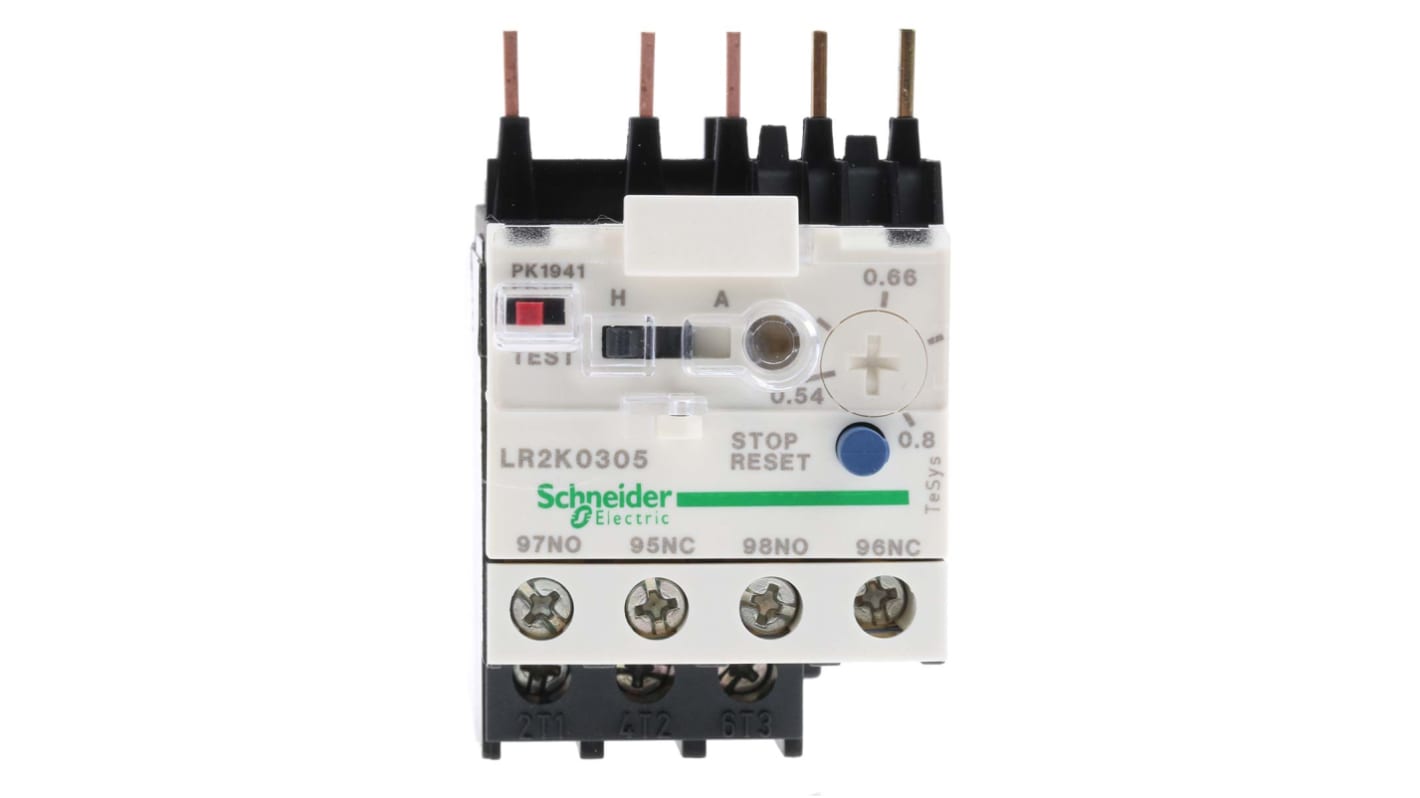
Schneider Electric, LR2K Thermal Overload Relay 1 NO/1 NC, 0.54A, 0.8 A F.L.C, 10A Contact Rating, 100 W, 250 V dc, 690V
- RS庫存編號:
- 758-923
- Distrelec 貨號:
- 304-09-056
- 製造零件編號:
- LR2K0305
- 製造商:
- Schneider Electric

小計(1 件)*
TWD1,643.00
(不含稅)
TWD1,725.15
(含稅)
訂單超過 $1,300.00 免費送貨
有庫存
- 39 件準備從其他地點送貨
**需要更多嗎?**輸入您需要的數量,然後按一下「查看送貨日期」以查詢更多庫存和送貨詳細資訊。
單位 | 每單位 |
|---|---|
| 1 + | TWD1,643.00 |
* 參考價格
- RS庫存編號:
- 758-923
- Distrelec 貨號:
- 304-09-056
- 製造零件編號:
- LR2K0305
- 製造商:
- Schneider Electric
規格
產品概覽和技術數據資料表
法例與合規
產品詳細資訊
透過選取一個或多個屬性來查找類似產品。
選取全部 | 屬性 | 值 |
|---|---|---|
| 品牌 | Schneider Electric | |
| Product Type | Thermal Overload Relay | |
| FLC Motor Rating | 0.54, 0.8A | |
| Relay Contact Current | 10A | |
| Series | LR2K | |
| Mount Type | Direct | |
| Power Rating | 100W | |
| Pole and Throw Configuration | 3 | |
| Terminal Type | Screw | |
| Normal State Configuration | 1 NO/1 NC | |
| IP Rating | IP2X | |
| Reset Method | Automatic & Manual | |
| Minimum Operating Temperature | -20°C | |
| Number of Auxiliary Contacts | 2 | |
| Width | 45mm | |
| Maximum Operating Temperature | 55°C | |
| Length | 116mm | |
| Contact Voltage | 690V ac | |
| Standards/Approvals | BS 4941, NFC 63-650, UL, CSA/IEC 60947, UKCA, VDE 0660 | |
| Depth | 65mm | |
| Control Voltage | 250, 690V dc | |
| 選取全部 | ||
|---|---|---|
品牌 Schneider Electric | ||
Product Type Thermal Overload Relay | ||
FLC Motor Rating 0.54, 0.8A | ||
Relay Contact Current 10A | ||
Series LR2K | ||
Mount Type Direct | ||
Power Rating 100W | ||
Pole and Throw Configuration 3 | ||
Terminal Type Screw | ||
Normal State Configuration 1 NO/1 NC | ||
IP Rating IP2X | ||
Reset Method Automatic & Manual | ||
Minimum Operating Temperature -20°C | ||
Number of Auxiliary Contacts 2 | ||
Width 45mm | ||
Maximum Operating Temperature 55°C | ||
Length 116mm | ||
Contact Voltage 690V ac | ||
Standards/Approvals BS 4941, NFC 63-650, UL, CSA/IEC 60947, UKCA, VDE 0660 | ||
Depth 65mm | ||
Control Voltage 250, 690V dc | ||
豁免
Schneider Electric Mini Thermal Overload Relays - LR2-K Range
Schneider Electrics K thermal overload relays are adjustable from 0.11 to 11.5 A, they have been predominantly designed for use in applications that require motor protection.
This range of mini thermal overload relays feature compensated and phase failure sensitivity, the range also offers manual and automatic reset. Each overload relay has 3-poles and screw clamp terminals.
Features & Benefits
• Commonly referred to by the range short name - LR2K
• Easy maintenance checks, check the tightening of cables through conducting thermographic testing and checking the mechanical operation of the product through manually operating the test, reset and stop buttons
• Direct mounting under a contactor is achievable
• Standards - IEC 947, BS4941, VDE 0660, NFC63-650
• Standards - CSA, UL, DEMKO, NEMKO, SEMKO, FIMKO, PTB
Applications of a Contactor and Control Overload Relay
• The majority of the time is to protect a motor
• To detect both overload conditions and fault conditions to then announce trip command for a protective device
• To deactivate a device whenever it pulls high current
• Sometimes developed into microprocessor systems and solid-state electronics