Infineon Through Hole Hall Effect Sensor 2.8 V 3.5 V, I2C, SSO, 3-Pin
- RS庫存編號:
- 236-3683P
- 製造零件編號:
- TLE4929CXHAM18NHAMA1
- 製造商:
- Infineon

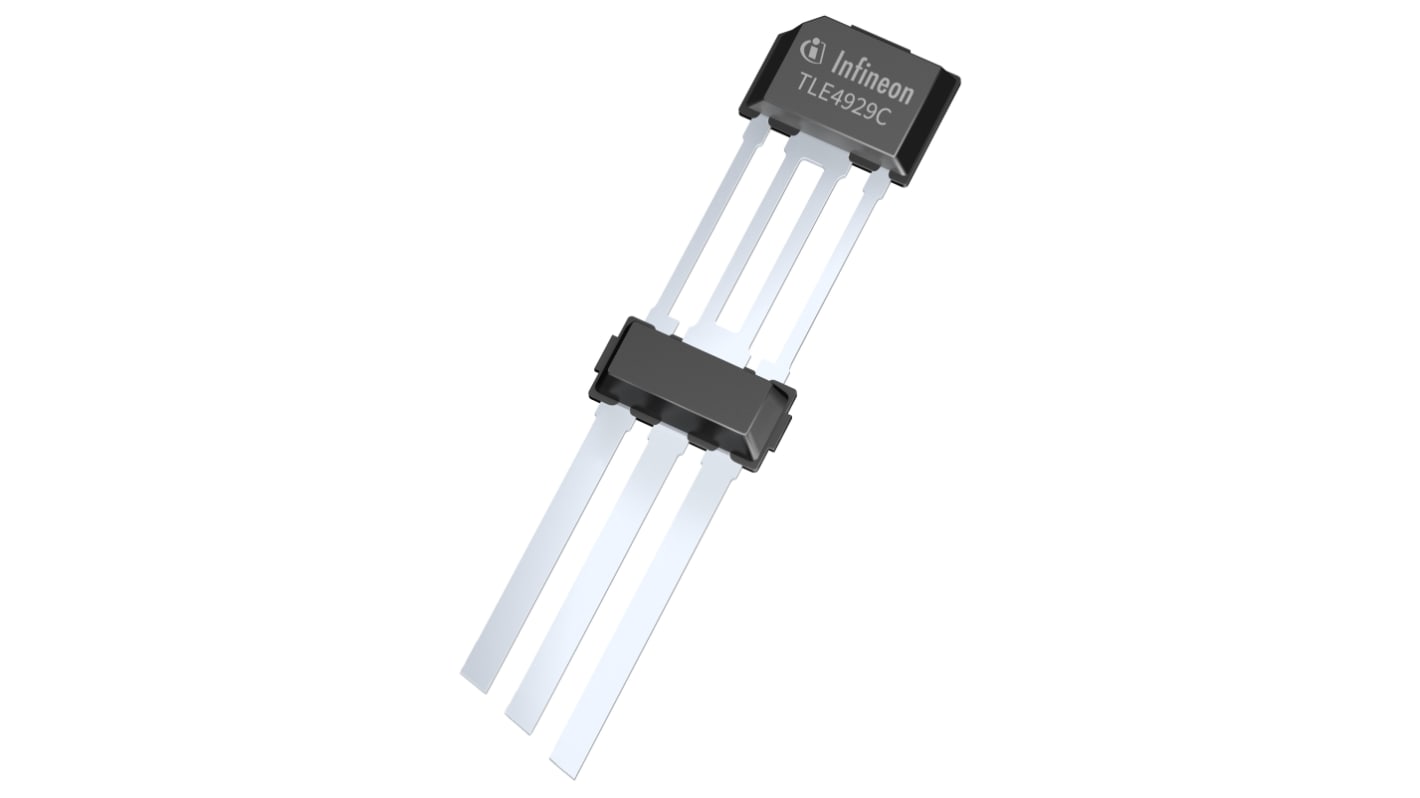
此圖片僅供參考,請參閲產品詳細資訊及規格
可享批量折扣
小計 10 件 (按連續帶提供)*
TWD935.00
(不含稅)
TWD981.80
(含稅)
訂單超過 $1,300.00 免費送貨
有庫存
- 加上 1,494 件從 2026年3月16日 起發貨
**需要更多嗎?**輸入您需要的數量,然後按一下「查看送貨日期」以查詢更多庫存和送貨詳細資訊。
單位 | 每單位 |
|---|---|
| 10 - 98 | TWD93.50 |
| 100 - 248 | TWD91.50 |
| 250 - 498 | TWD89.50 |
| 500 + | TWD87.50 |
* 參考價格
- RS庫存編號:
- 236-3683P
- 製造零件編號:
- TLE4929CXHAM18NHAMA1
- 製造商:
- Infineon
規格
產品概覽和技術數據資料表
法例與合規
產品詳細資訊
透過選取一個或多個屬性來查找類似產品。
選取全部 | 屬性 | 值 |
|---|---|---|
| 品牌 | Infineon | |
| Sensor Type | Hall Effect | |
| Product Type | Hall Effect Sensor | |
| Technology | Analogue | |
| Mount Type | Through Hole | |
| Interface Type | I2C | |
| Magnetic Type | Omnipolar | |
| Minimum Supply Voltage | 2.8V | |
| Maximum Supply Voltage | 3.5V | |
| Package Type | SSO | |
| Sensitivity | 7.7LSB/mT | |
| Minimum Operating Temperature | -40°C | |
| Pin Count | 3 | |
| Maximum Operating Temperature | 125°C | |
| Standards/Approvals | No | |
| Width | 1.6 mm | |
| Height | 1.1mm | |
| Series | TLE4929 | |
| Length | 2.9mm | |
| Automotive Standard | No | |
| Supply Current | 3.4mA | |
| 選取全部 | ||
|---|---|---|
品牌 Infineon | ||
Sensor Type Hall Effect | ||
Product Type Hall Effect Sensor | ||
Technology Analogue | ||
Mount Type Through Hole | ||
Interface Type I2C | ||
Magnetic Type Omnipolar | ||
Minimum Supply Voltage 2.8V | ||
Maximum Supply Voltage 3.5V | ||
Package Type SSO | ||
Sensitivity 7.7LSB/mT | ||
Minimum Operating Temperature -40°C | ||
Pin Count 3 | ||
Maximum Operating Temperature 125°C | ||
Standards/Approvals No | ||
Width 1.6 mm | ||
Height 1.1mm | ||
Series TLE4929 | ||
Length 2.9mm | ||
Automotive Standard No | ||
Supply Current 3.4mA | ||
The Infineon XENSIV hall based crankshaft sensor for hybrid powertrains and similar industrial applications, such as speedometer or any speed-sensor with high accuracy and low jitter capabilities.
Measures speed and position of tooth/pole wheels
Switching point in middle of the tooth enables backward compatibility
Magnetic stray-field robustness due to differential sensing principle
Direction detection and Stop-Start-Algorithm
Programmable switching threshold for additional accuracy